

Migraine and headaches

Migraine in Children
A MIGRAINE IN CHILDHOOD: SYMPTOMS, DIAGNOSIS AND MANAGEMENT Migraine is the syndrome of acute and recurrent headaches most common in children . This condition has clinical features unique in the pediatric population, which can change with age and have a significant impact on the quality of life of the child, affecting their education, socialization and family life. The purpose of this article is to describe the different clinical features of migraine in children and discuss the treatment options potential for pediatric migraine , including chronic migraine . In many patients, a multidimensional approach involving lifestyle modifications , treatment of comorbidities and pharmacological treatments is necessary for optimal headache control. What this article brings: Migraine presents as various phenotypes in children , which sometimes change as the child ages. There exists a expanded range of treatment options for chronic migraine patients. Headaches are common in children. Recurrent headaches occur in one-third to one-half of children and adolescents , and occur daily in about 2-4% of young patients. Headaches are classified into two categories: primary disorders, such as migraine, and secondary disorders, which are due to an underlying condition. The objective of this article is to describe the classification, the clinical characteristics and the pediatric migraine treatment . Childhood migraine with and without Aura Migraine is the most common acute and recurrent headache syndrome in children. The prevalence of episodic migraine is approximately 2-5% in children preschool, 10% in school-aged children and 20-30% in adolescent girls . Approximately 20% of migraine patients experience their first crisis in less than 5 years . There are family history of migraine in the majority of patients. Migraine can have a significant impact on a child's quality of life , affecting their education, socialization and family life. The differences between the characteristics of pediatric and adult migraine patients have been recognized for many years, as described in the International Classification of Headaches , Third Edition. Headaches in children tend to be reported as being of shorter duration , with a lower limit of 2 hours , are more likely to be bilateral fronto-temporal before adolescence, and the sensitivity to light and sound is generally more important. Infantile colic, an increased risk of developing a migraine Even in childhood, Migraine symptoms vary depending on the age of the child . Children with infantile colic run a increased risk of developing a migraine later in life, and some authors suggest it may be a precursor to migraine. In preschool children, migraine often consists of episodes where the child appears sick or pale, stops activities, complains of abdominal pain , vomiting and need to sleep. The pain may be expressed as irritability, crying , restlessness, or finding a dark room to sleep. THE Migraine patients between the ages of five and ten tend to suffer from bilateral frontal headaches accompanied by nausea abdominal pain , vomiting , of photophobia , phonophobia and a need to sleep . Parents may describe these children as being pale with dark circles under the eyes. The aura begins to appear in middle-aged children . Older adolescents begin to present with bitemporal and then unilateral headaches, although the location and intensity of pain often change during or between attacks . Migraine can occur with or without aura . Migraine auras are classified into the following types: visual, sensory, speech and/or language, motor, brain stem and retinal . Alone 10 to 20% of children with migraine have an aura, often for the first time after age 8 . The aura usually precedes the headache by less than 60 minutes and lasts 5 to 20 minutes. The aura can manifest without a headache . Visual disturbances are the most common type of aura in children . They consist of blurred vision, spiking spectra (zigzag lines), scotomas (field defects), scintillations, black dots, kaleidoscopic patterns of various colors, micropsia or macropsia (size distortions) and metamorphopsia (visual distortion in which straight lines appear bent). Other auras include sensory symptoms (numbness or tingling), speech and/or language deficits (aphasia or dysarthria), motor deficits (hemiparesis), loss of attention, confusion, amnesia, restlessness or brainstem symptoms (vertigo, dysarthria, tinnitus, diplopia, hyperacusis). Aura symptoms vary widely within and between attacks. Childhood episodic migraine THE episodic migraines in children can last from 2 to 72 hours, but usually last less than 4 hours . Some young patients report even shorter headaches, 10 to 20 minutes . The intensity of childhood headaches is often lower than that of adult migraine , with throbbing pain. The headache phase may be associated with cold extremities, nausea, anorexia, vomiting, diarrhea or constipation, dizziness, chills, excessive sweating, ataxia, numbness, photophobia, phonophobia, memory loss or confusion. Often the patient cannot concentrate or function effectively during or immediately after episodes. Relief is usually associated with sleep. After the headache phase, the patient may experience a postdromic phase, where they may feel either elated and full of energy, or more typically exhausted and lethargic. This phase of migraine can last from a few hours to a few days. Pediatric migraine is associated with a variety of comorbid conditions Migraine is associated with a variety of comorbid conditions. Of the psychiatric symptoms such as depression, panic attacks, anxiety disorders or specific phobias may be present. Epilepsy and migraine are often present in the same individual, although most migraine patients do not have attacks. Patients with mild epilepsy have been shown to have a higher incidence of migraine , and one-third to one-half of children with childhood benign occipital epilepsy report migraine symptoms after an epileptic seizure. Migraineurs are more prone to motion sickness than non-migraine patients. THE intermittent dizziness are common in migraine patients. There cardiovascular reactivity to postural changes is higher in migraine patients, which can lead to dizziness or orthostatic intolerance . Migraines are also associated with sleep disturbances , and the most common trigger for headaches in children is a sleep disturbance. Migraine children, especially those who are in overweight , have a higher incidence of sleep disordered breathing and parasomnias. Variants of migraine The migraine headache The migraine state is a severe form of migraine in which the headache attack is continuous for more than 72 hours . Patients usually have a history of migraine. Treatment that is often effective is intravenous fluids, an antiemetic such as prochlorperazine, and a non-steroid such as ketorolac.16 Steroids at the time of the migraine state can prevent its recurrence. Familial hemiplegic migraine in children Hemiplegic migraine can occur sporadically (without direct link to a triggering factor) or family. The estimated prevalence of hemiplegic migraine is 0.01%, with familial and sporadic versions occurring with the same prevalence. The sporadic form usually manifests in adolescence , while the familial form may manifest earlier . The hallmark of hemiplegic migraine is the unilateral muscle weakness that accompanies a migraine attack . Hemiplegia may precede, accompany, or follow the headache, and symptoms may last from a few hours to a few days , and are fully reversible . Patients may also present with a concurrent non-motor aura, such as visual disturbances, numbness, or aphasia. Severe seizures may be accompanied by encephalopathy or coma . Familial hemiplegic migraine is an autosomal-dominant form of migraine with aura . It was discovered that mutations in the CACNA1A, ATP1A2, SCN1A and PRRT2 genes caused familial hemiplegic migraine. Mutations in the CACNA1A gene have also been associated with episodic ataxia type 2. Other types of severe familial hemiplegic migraine may manifest as a coma, fever and meningismus . The chances of finding a genetic mutation in affected patients are increased when there is a positive family history and when the child has symptoms before the age of 16 . THE structural lesions , vasculitis, cerebral hemorrhage, brain tumor, mitochondrial myopathy, encephalopathy, alternating hemiplegia, and lactic acidosis should be considered in the differential diagnosis. Some forms of familial hemiplegic migraine respond to acetazolamide or calcium channel blockers, such as verapamil. Acute treatment with triptans and ergotamine derivatives is considered contraindicated due to the potential risk of cerebral vasoconstriction , although some have recently argued that the contraindication of triptans should be reconsidered. Pediatric migraine with brainstem aura migraine with brainstem aura , formerly known as basilar-type migraine , is a subtype of migraine with aura and is observed primarily in adolescents and young adult women . Aura symptoms manifest in the brainstem, but there is no motor weakness. Head pain may be in the occipital region . The episode must present at least two of the following aura symptoms: dysarthria, vertigo, tinnitus, hypacusia, diplopia, ataxia, decreased level of consciousness or bilateral paresthesias. There are often family history of typical migraine . Patients may present with basilar migraine attacks interspersed with typical migraine attacks . preventive treatment with topiramate has helped some patients with this form of migraine. There acute confusional migraine is characterized by transient episodes of amnesia, acute confusion, agitation, lethargy and dysphasia. The prevalence of this form of migraine has been estimated at 0.04% of children with migraine . Acute confusional migraine is often precipitated by a head trauma minor, but can occur without a push factor. Some children experience recurring episodes. The patient usually recovers within a few hours, often after a period of sleep. The child may not have a history of headaches but often develops typical migraine attacks when older. This is often a diagnosis of exclusion, with the diagnosis being made when the child wakes up the next morning with symptoms gone. Childhood Episodic Syndromes THE episodic syndromes in children are considered as potential precursors to migraine , as many patients with these episodic syndromes will develop more typical features of migraine later in their life. Cyclic vomiting THE cyclic vomiting syndrome is characterized by recurrent episodes of intense vomiting separated by symptom-free intervals. The prevalence of this syndrome in white populations is 1.9%. The cyclic vomiting syndrome associated with migraine usually begins when the patient is a toddler and disappears in adolescence or early adulthood ; it rarely appears in adulthood. Women are more numerous than men to be affected by cyclic vomiting. Many patients with cyclic vomiting present with regular periodicity of their illness , and episodes occur with clockwork regularity once every 1 to 3 months. Symptoms usually come on quickly at night or early in the morning and last 1 to 10 days. The associated symptoms are as follows: - abdominal pain, – nausea, vomiting, – anorexia, – pallor, lethargy, – photophobia, phonophobia and headaches. Headaches may not appear until the child is older . A family history of migraine is usually present. These children often benefit from intravenous fluid therapy. The cyclic vomiting syndrome associated with migraine is a diagnosis of exclusion. Preventative medications, such as amitriptyline, cyproheptadine, and propranolol, have been recommended. Abdominal migraine There abdominal headache is characterized by recurrent episodes of generalized abdominal pain with nausea and vomiting , but often without headache . Episodes are often relieved by sleep And the child wakes up later feeling better. The estimated prevalence in children is 2 to 4% . Abdominal migraine can alternate with typical migraine and can lead to the typical migraine as the child develops. Treatment is focused on avoidance of triggers and on conventional drugs migraine prevention . Benign paroxysmal vertigo of childhood THE benign paroxysmal vertigo of childhood is a condition characterized by brief episodes of dizziness, dizziness and nausea , which are usually found in children aged 2 to 4 years old . The patient may have nystagmus within seizures, but usually not between them. The episodes can be accompanied by a sudden and unexplained fear of difficulty with balance or a refusal to stand . Symptoms usually last from a few minutes to a few hours. These children often develop a more typical migraine as they age . Brain magnetic resonance imaging (MRI) may be obtained to rule out posterior fossa abnormalities, especially if neurological examination abnormalities are seen between episodes. Treatment is often unnecessary due to the short duration of attacks, but if events are frequent or disabling, cyproheptadine has been used. THE paroxysmal torticollis in infants is an uncommon disorder characterized by repeated episodes of head tilt associated with pallor , nausea, vomiting, and ataxia. Seizures usually occur in infants and can last from a few minutes to several days. Posterior fossa abnormalities should be considered in the differential diagnosis. As with hemiplegic migraine, recent data have linked this episodic syndrome to mutations in the CACNA1A gene in some patients. Migraine Assessment and Diagnosis Migraine patients have a history at least five attacks associated with headaches of moderate or severe intensity, to one aversion to strong stimuli (such as bright lights, loud noises, strong odors), at nausea , worsened by exercise, and relieved by rest. The child with migraine must present a normal neurological examination. Only a small percentage of patients with headache require laboratory and radiological studies. Neuroimaging is usually not warranted in children whose history is compatible with migraine and whose neurological examination is normal. An imaging study should be considered in patients with a history of seizures, recent head trauma, significant change in headache, signs of focal neurological deficits, or papilledema on physical examination . There are no hard and fast rules for the assessment of patients with headache; the decision to perform a neuroimaging study is ultimately based on clinical judgement. Electroencephalography is not useful in the routine evaluation of patients with headache. It may be considered in patients with an atypical migraine aura, episodic loss of consciousness, or other symptoms suggestive of a seizure disorder. Lumbar puncture is indicated if meningitis , encephalitis, subarachnoid hemorrhage, or high (or low) pressure headache syndromes are being considered. Pediatric migraine treatment General precepts of treatment Treatment strategies migraine in children must include the identification of potential trigger factors , pain control at the time of the headache, and preventive medication . THE treatment of children with mild seizures and infrequent consists mainly of rest , avoid triggers and take pain medication as needed . A adequate sleep, regular meals, proper hydration and avoid overloading the child's schedule are important. Helping the child recognize migraine triggers is helpful but often difficult because many headache episodes do not have specific triggers. It is important that the patient has realistic expectations: identifying and avoiding triggers reduces the frequency of migraines but does not completely eliminate them. Psychological triggers THE psychological triggers of migraine in children can be the stress (busy schedules), anxiety and depression. It is important to emphasize to the patient and his family that migraine is not an imaginary disease. or psychological. Stress isn't the only cause of headaches, even though it makes migraines more difficult to manage. Some patients deny the presence of stress in their lives, but most readily acknowledge the role of a busy schedule. Physiological triggers include fever or illness, missed meal, fatigue, and lack of sleep. Other environmental triggers of migraine include fluorescent light, bright light, flickering light, barometric pressure changes, high altitude or altitude change, strong odors, computer screens or rapid temperature changes. Some patients report that intricate visual patterns like stripes, checks or zigzag lines can trigger migraines. Physical overexertion can trigger childhood migraine . Some migraine sufferers report that they are more likely to have headaches after playing sports or being extremely active. A head trauma minor (e.g., a bullet to the head, a fall on the head) can also cause a migraine attack. Travel or movement can cause migraines, especially in young children. Non-pharmacological treatment modalities such as self-relaxation, biofeedback and self-hypnosis may be reasonable alternatives to pharmacological treatment for managing childhood migraine, especially in adolescents. Treatment of migraine in children Tips for relieving childhood migraine At the time of the headache, if possible, advise the child to lie down in a cool, dark, quiet room and fall asleep . Sleep may be the most effective migraine treatment. Some patients find that ice or pressure on the affected pain area can provide temporary pain relief. For the mild seizures to moderate, nonsteroidal anti-inflammatory drugs are effective if administered during the aura or the initial phase of the headache. ibuprofen is administered at an initial dose of 10mg/kg. Gastric stasis occurs in migraine patients and can lead to delayed absorption of oral medications. Occasionally, the soft drinks can improve absorption. There caffeine may help potentiate the effect of migraine pain relief in children. Early use of an antiemetic may help relieve symptoms of associated nausea or vomiting and facilitate sleep. For children with acute migraine and severe nausea and vomiting, rectal promethazine may be given at a dose of 0.25mg/kg to 0.5mg/kg. When to consider triptans in children? For the moderate to severe seizures , painkillers over-the-counter may still be effective, but Migraine-specific medications (i.e., triptans) should be considered . A frequently used agent is oral sumatriptan, which can be started at 25 mg, with a maximum dose of 100 mg. This treatment can be repeated every two hours if necessary. Children aged 6 to 10 years and weighing less than 50 kg should start with the smallest dose of triptan available , such as sumatriptan 5 mg nasal spray or 25 mg tablet. For children who are unable to swallow pills, alternatives include orally disintegrating tablet formulations rizatriptan (5mg or 10mg wafer) and zolmitriptan (2.5mg or 5mg), and almotriptan tablet (6.25mg or 12.5mg). Exceptional long-lasting migraine in children For patients with unusually severe or long-lasting seizures who present to the emergency room with a migraine, parenteral drugs (intramuscular, intravenous, etc.) should be considered if oral painkillers or triptans have failed . First-line treatments for migraine in children of long duration are intravenous fluid, such as 20 ml/kg normal saline, given with intravenous prochlorperazine (0.15 mg/kg up to a maximum of 10 mg) and intravenous ketorolac (0.5 mg/kg up to a maximum of 30 mg). Pretreatment with diphenhydramine may prevent potential dystonic reactions associated with prochlorperazine. Both intravenous and intranasal forms of dihydroergotamine have been used successfully in children and are generally limited to the treatment of prolonged migraine that has not responded to other therapies. Common side effects are nausea, vomiting, and anxiety. Administration of dihydroergotamine should be preceded by the use of an antiemetic (i.e. prochlorperazine or metoclopramide) 20 minutes before the first dose of dihydroergotamine. For children who weigh less than 25 kg or are younger than 9 years old, intravenous dihydroergotamine is given as 0.5 mg over 3 minutes, and 1 mg over 3 minutes for children 10 years of age or older. Acute treatments for childhood migraine The evidence for acute treatments for childhood migraine was recently reviewed in a practice guideline from the American Academy of Neurology . THE prophylactic or preventative medications are taken daily to reduce the frequency or severity of headaches and associated symptoms. A good response to prophylactic drugs is often considered a 50% reduction in frequency or severity of seizures . The use of Prophylactic (modifier) medications should be considered for children with frequent (>2/week), prolonged, and/or disabling migraine attacks that do not respond adequately to other treatments. Often, several weeks are necessary before observing therapeutic gains with prophylactic drugs. Possible preventive medications include amitriptyline, propranolol, gabapentin, topiramate, flunarizine, verapamil, and riboflavin. Unfortunately, there are few high-quality data on the best preventative treatment for migraine in children. In part, it is difficult to demonstrate the effectiveness of a single approach due to traditionally high placebo response rates in children, approaching 50-70% in some studies. This was demonstrated in a recent high quality randomized controlled trial (CHAMP study) which compared amitriptyline, topiramate and placebo for pediatric migraine. In this study, the placebo response rate approached 60%, with topiramate and amitriptyline failing to exceed this success rate. Nevertheless, the best available evidence supports the use of topiramate or amitriptyline and cognitive behavioral therapy in the preventive treatment of migraine. Treatment of chronic migraine in children There chronic daily headache is a disorder whose diagnosis is based on the presence of headaches for a duration greater than or equal to 15 days of headache in 1 month , over a period of three consecutive months, and without underlying organic pathology . Headaches last more than 4 hours a day. A population-based study in Taiwan of 7,900 middle school students aged 12 to 14 found that 2.4% of middle school girls and 0.8% of middle school boys suffered from chronic daily headaches. Among them, 67% suffered from chronic migraine, but only 4% consulted a neurologist. In an even younger sample of 5,671 Brazilian children aged 5 to 12, 2.2% of girls and 1.1% of boys suffered from daily headaches, and 0.6% from chronic migraine.3 Chronic daily headaches can affect up to 4% of young girls and up to 2% of young boys, with similar prevalence rates observed in studies carried out in Asia, Europe and the United States. Many adolescent patients with chronic daily headaches have a history of episodic migraine . There transformation into chronic migraine can occur over a period of several weeks to several months, or occur suddenly in a few hours. About 25% of adolescents with chronic daily headaches have no significant history of headaches, whereas an infection such as mononucleosis or minor head trauma can trigger a new, persistent daily headache. A smaller number of patients will have history of tension headaches before their chronic daily headache. Most of the time, the child with chronic migraine complains of at least two distinct types of headache: #1: The first type, the most important, consists of severe intermittent headaches that resemble migraines . They are often associated with nausea during the most severe periods, and the patient frequently presents with photophobia, phonophobia and osmophobia. For these more severe headaches, sleep can sometimes reduce the intensity, but the patient will always have a persistent headache on waking. The frequency of these severe headaches varies between individuals, but they usually occur several times a week in an untreated patient. #2: In addition to these severe intermittent headaches, the chronic daily headache patient often complains of a more continuous daily headache . This headache continues can vary in intensity , often being worse in the morning or at the end of the school day . The characteristics of continuous headache are similar to those of severe headache episodes, but much less intense. Some patients may also describe this permanent headache as having the characteristics of a tension headache , the pain being banding or crushing rather than throbbing. Sleep, dizziness, anxiety and mood disorders THE chronic headaches are often associated with a pentagram of difficult comorbid symptoms, including sleep disturbances, dizziness, anxiety and mood disorders , muscle aches and abdominal problems. THE sleep is disturbed in at least two-thirds of children with chronic daily headaches . Patients often report a delay in falling asleep , not being able to fall asleep until 30 minutes to several hours after going to bed. Some teens report frequent nocturnal awakenings . In general, headache syndrome does not go away until sleep is improved. We can consider advice on sleep hygiene or a formal sleep consultation , as lack of sleep can be a significant contributing factor to headache symptoms. Patients with chronic migraine also complain dizziness, which is associated with feeling weak, nausea, and blurred or lost vision. In our experience, a common form of vertigo is often positional, and may involve syncope or near syncope after standing. Orthostatic vertigo is particularly marked in the morning. A difference in pulse or blood pressure between sitting and standing may be noted if the patient is standing for several minutes in the office. One can observe either a significant tachycardia when standing (postural orthostatic tachycardia syndrome) and/or a decrease in systolic blood pressure when standing (neurocardiogenic syncope). Severe migraine days may also be accompanied by dizziness (migraine vertigo). Finally, some patients present with vertigo independent of position and unrelated to migraine pain. In this patient group, the role of anxiety needs to be explored. THE mood disorders and anxiety also frequently coexist with chronic migraine. Mood problems may precede or follow the onset of the headache. Headache and mood symptoms should be treated. If mood and anxiety issues are significant, it is difficult to control headaches until these symptoms improve. However, chronic migraine should be considered a primary headache syndrome and not a mood disorder. It is not uncommon to see patients suffer from post-traumatic stress disorder, generalized anxiety disorder, or social anxiety disorder with school avoidance. There are interesting environmental factors that play a role in headache burden, including variability over the school year . Most of our patients do better in the summer when school is not open, and frequently experience worsening headaches at the start of the school year.36 School Truancy and School Functioning life in general can be a significant problem. Other common comorbid symptoms include nonspecific abdominal pain, back pain, neck pain, and diffuse muscle and joint pain. Often, no additional organic etiology is found to explain these additional pain symptoms. Pediatric assessment for migraine Assessment of the pediatric patient with chronic migraine includes a thorough history (detailed questionnaire) and physical examination , as well as consideration of a neuroimaging study and, occasionally, a lumbar puncture. In patients with certain comorbidities, a tilt table test or formal sleep assessment may be helpful. Neuroimaging studies will be normal in the vast majority of patients with chronic headaches. These patients sometimes have white matter abnormalities, arachnoid cysts, or pineal cysts. which are generally considered to be of no clinical significance in relation to headache. There chronic migraine is maybe the most common chronic headache disorder , but several other chronic headache diagnoses should also be considered. Chronic tension headache is distinguished by the absence of migraine features. New daily persistent headache is defined as the sudden onset of head pain in an individual with no significant history of headache. In idiopathic intracranial hypertension, most (but not all) patients have papilledema and a cerebrospinal fluid opening pressure greater than 28 cm of water. Of the Eye pain, visual dimness, and throbbing tinnitus are common symptoms in addition to headache . Several brain MRI findings have been associated with Idiopathic intracranial hypertension , including the appearance of an empty sella, dilation of the optic nerve sheath, and cleft ventricles , although a recent study showed that bilateral transverse sinus stenosis on conventional MRI was more reliable than other previously described MRI findings in idiopathic intracranial hypertension. L Treatment of chronic migraine in children Chronic migraine is often difficult to control and drug therapy may take weeks or even months to achieve a significant change in headache burden . The cornerstones of treatment are education, preventative medications, attention to environmental triggers and time. It is difficult for many families to understand that head pain can persist for so long , that no abnormalities appear in the diagnostic tests and that the medications prescribed to them are not immediately effective . It is also not uncommon for these patients to see multiple doctors because of this frustration. It is therefore helpful to spend enough time with the patient and family to discuss the diagnosis of chronic migraine, how secondary causes of the headache have been ruled out, the role of drugs , when do not use painkillers , the role non-drug approaches (such as biofeedback or physiotherapy and osteopathy) and what the family should expect in the short and long term. Preventive drugs Preventive medications are used in episodic migraines to reduce the frequency of migraines . However, in the case of chronic daily headaches, a reasonable short-term treatment goal would be to make severe intermittent headaches less frequent and permanent headaches less intense. Unfortunately, there have been few prospective, randomized, controlled studies in children to give us insight into the most effective or safest drug to use in chronic migraine in children . Studies in adults and children have shown that Tricyclic antidepressants , such as amitriptyline, are helpful in chronic daily headaches. Consideration should be given to changes in the electrocardiogram, as this drug may prolong the QT interval. Weight gain is a big concern for teens taking these drugs, and it affects some children more than others. Amitriptyline can also be useful for falling asleep. The typical dose of amitriptyline is 0.25mg/kg/day to 1.0mg/kg/day (25-100mg for most teenagers), although higher doses can be used. Other tricyclics, such as nortriptyline or protriptyline, may cause less sedation. others serotonergic agents such as selective serotonin reuptake inhibitors or selective norepinephrine reuptake inhibitors have also been shown to be effective in some adults with chronic headaches.39 Selective serotonin reuptake inhibitors appear to be less effective than tricyclics for pain control, although they may be more useful in children for their positive effects on mood. Studies in patients with headaches have shown that anticonvulsants are also helpful. Topiramate and gabapentin have been used. Topiramate is perhaps the one with the best demonstrated use, and a target dose of 1mg/kg/day to 2mg/kg/day is used (100mg nightly for most adolescent patients). These different choices can allow us to also treat some of the comorbid symptoms of our patients. Antidepressants can treat underlying mood disorders as well as sleep problems. Beta-blockers may be useful for patients with postural orthostatic tachycardia syndrome or hypertension. Calcium channel blockers are useful for patients who also have hypertension, but cause constipation and orthostatic hypotension. If the patient needs to lose weight, topiramate is a good choice, although it may lead to mental disorders. Small retrospective studies in the pediatric population have also demonstrated significant improvement with BoNT-A injections. Acute pain relievers are often not very effective for chronic migraine . Many patients report that acute treatments are not effective for their daily and continuous headaches. It is reasonable to discourage patients from trying to use painkillers to treat their permanent headache, as this can lead to overuse of painkillers and a possible rebound headache. The fight against the rebound of these substances is part of the treatment. Drugs implicated in this overuse syndrome are opioids, butalbital, isometheptene, benzodiazepines, ergotamine, and triptans. On the other hand, for more severe intermittent headache episodes with migraine-like features, analgesics should be considered. Approaches may include the use of migraine painkillers such as triptans, indomethacin, or other nonsteroidal anti-inflammatory agents. Compounds that contain caffeine, barbiturates, opiates, or have high rebound potential should be limited or avoided. Patients generally find that when the preventative medications start to work, the pain relievers also become more effective. Natural treatment for childhood migraine Natural migraine treatments can help relieve attacks in children. The use of the feverfew can be very effective. Innovative treatments like MIG SPRAY can be used from the age of 12 . Nevertheless, the therapeutic effect will be gradual and an evaluation over a minimum of 3 months will be necessary . Osteopathy has also shown favorable effects in the management of migraine in children. Several sessions, between 3 and 6 are however necessary. THE sophrology technique And hypnosis also allow to stimulate the placebo effect and according to the child to control his pain. What to do when this strategy does not work? What to do when this strategy does not work? Not all patients respond to the above suggestions. When this happens, it is useful to question the diagnosis of migraine , of treat comorbidities that interfere with recovery and consider BoNT-A i.e. the use of butulin toxin , trigger point injections, neurostimulation, or behavioral programs that focus on multiple targets: symptoms and return to functioning. Use of BoNT-A may reduce the number of headache and migraine days in patients suffering from chronic migraine. Retrospective chart reviews also showed a positive response in children. In the United States, it is an expensive treatment, and many insurance companies require the patient to have tried and failed at least three preventative therapies before considering BoNT-A. This treatment is especially useful for patients with complicated medical regimens or who seem extremely sensitive to the side effects of oral medications. CGRP: The Calcitonin Gene-Related Peptide is a 37 amino acid peptide neurotransmitter associated with pain and is the target of a new migraine treatment . Early studies used small molecule antagonists (telcagepant), but these early attempts were associated with liver problems. Anti-calcitonin gene-related peptide antibodies have recently been developed for use as preventive therapy. Positive effects are seen in early adult studies, but their use in pediatrics is still being studied and not readily available. The best evidence for the therapeutic use of nerve blocks is seen in post-traumatic headaches. A small retrospective study involved 15 patients who received an occipital nerve block for chronic post-traumatic headache. In the follow-up of 14 patients 5 months after injury, nine of them reported a long-term response to occipital nerve blocks43. The approaches biobehavioral have been shown to be effective in managing headache pain. It has been demonstrated that the biofeedback reduces pain levels and frequency of headaches. Multidisciplinary behavioral programs, which draw on the expertise of physical medicine, psychology and neurology, help restore function to patients and improve pain control. One of the strongest levels of evidence observed in a study on Pediatric migraine treatment has been seen when cognitive behavioral therapy has been added to standard migraine treatment . In conclusion, chronic migraine in children can cause significant pain and functional disability. There is no single treatment to help everyone. Pharmacology is helpful, but a more holistic approach is often needed. Conclusion : The frequency of migraines can change as children grow into adulthood . In one of the longest longitudinal studies of pediatric migraine patients, children with migraine were followed for 40 years. Migraines appeared on average at 6 years of age. By puberty or early adulthood, 62% of children had been migraine free for at least 2 years and about 33% of them had regular attacks again after an average of 6 years without migraine. A startling 60% of the original 73 children still suffered from migraines after age 30, while 23% of participants never had a migraine-free year. Among patients who became parents, 52% had at least one child in their current or previous family who developed recurrent migraine headaches47. The prognosis for chronic headaches is also not entirely bleak. In a follow-up study of a community sample of middle school students with chronic headaches, 50% were shown to have improved after one year and 75% after two years. Unfortunately, 12% of them suffered from chronic daily headaches 8 years later. Some vacillated between chronic and episodic headaches. When patients get better, their sleep often improves first, then the frequency of severe migraine episodes decreases, followed by continued improvement in headache. When patients manage to resolve the daily headache, they often revert to their premorbid state as an episodic migraine patient. The field of headache medicine is optimistic that with successful identification of the primary headache syndrome and aggressive pharmacological and non-pharmacological management, the average duration and severity of symptoms can be significantly reduced.
Learn more
Treatments for vestibular migraine
Découvrez les traitements médicaux et naturels de la migraine vestibulaire, ainsi que des conseils pratiques pour réduire la fréquence et l'intensité des crises.
Learn more
What are the treatments for ophthalmic migraine?
Cet article vous présente la migraine ophtalmique, ses causes et ses traitements.
Learn more
What are the causes and symptoms of abdominal migraines?
Symptoms of abdominal migraine The main symptom of an abdominal migraine is pain around the navel, diffuse and very painful. The intensity of the pain can vary from moderate to severe. In addition to the pain, the children present symptoms such as nausea , vomiting , loss of appetite in particular due to the strong pain and a significant pallor . Each migraine attack lasts between 2 hours and 3 days . Between attacks , the children are healthy and show no symptoms . Symptoms of an abdominal migraine are similar to those of many other childhood gastrointestinal conditions, i.e. those involving the digestive system. What difference(s) with other gastrointestinal pathologies? The difference is that abdominal migraine symptoms can arrive after days or even months without any symptoms. Doctors don't know exactly what causes abdominal migraines. One theory is that these migraines stem from a problem with the connection between the brain and the gastrointestinal tract . A study has also shown a link between these connection problems and a slower movement of digested food through the intestines . Abdominal migraines are also more common in children who have parents or relatives with migraines. In fact, one study also found that more than 90% of children with this condition had a parent or sibling with migraines . Triggering factors These migraines may share some of the same risk factors as other types of migraine, including stress and anxiety . Emotional changes can cause the release of chemicals that trigger migraine symptoms. We can also find certain triggering factors such as: tiredness , exposure to strong light , certain foods (nitrates and other chemicals found in certain meats, dairy products, caffeine, nuts, certain fruits such as citrus fruits, bananas, etc.), lack of sleep , motion sickness , hunger , etc.
Learn more
What is hemiplegic migraine?
A rare type of migraine Hemiplegic migraine is a type of migraine that is as rare as it is serious. Its symptoms may be associated with stroke symptoms such as, for example, muscle weakness that can cause temporary paralysis on one side of the body, also called Hemiplegia . Symptoms Sometimes, upstream of the pain caused by this migraine, other symptoms can be felt. They are called auras , they can include temporary disorders affecting the muscles involving, therefore, a loss of control and / or sensations such as: Intense, throbbing pain, often on one side of the head. A feeling of needles , which often travels from the hand to the arm. Numbness on one side of the body , which may include an arm, a leg and half of the face. Weakness or paralysis on one side of the body. Loss of balance and coordination . Dizziness or vertigo . Nausea and vomiting . Auras usually appear gradually over 30 minutes, can last for hours , and then gradually fade away . They may be more painful and longer than other types of migraine. The apparent symptoms of stroke can be disturbing or even debilitating. Unlike a stroke, symptoms begin slowly and intensify , then they may completely disappear. Muscle problems usually disappear within 24 hours, but can sometimes last a few days. This type of migraine is unfortunately not predictable . Usually the pain follows the paralysis, but this can be reversed, just as the person may not feel a headache. It may also be that the person feels a lot of pain, but only feels a little weak, and then the next attack may lead to more severe paralysis, with less pain. This varies greatly from person to person, and from crisis to crisis. Very rarely, some people may have coordination problems, following numerous hemiplegic migraine attacks. Symptoms of hemiplegic migraine often appear during childhood or adolescence . In adulthood they may disappear.
Learn more
Herbs for Migraine Relief
Soulager la migraine sans médicaments, c’est possible grâce à certaines plantes reconnues pour leurs effets anti-inflammatoires, antispasmodiques ou vasodilatateurs. Dans cet article, on explore les vertus du partenaire, du gingembre, de la grande camomille ou encore de la menthe poivrée, ainsi que les formes les plus efficaces : infusion, gélule, huile essentielle…
Learn more
La migraine, une maladie complexe
Chaque jour, des millions de personnes ressentent une douleur lancinante, sourde ou intense, qui frappe un côté de la tête ou les deux. Ce n’est pas un simple mal de tête : c’est une crise migraineuse.
Une maladie neurologique complexe, souvent chronique, qui peut durer des heures, voire des jours, et bouleverser une vie. Lumière, bruit, odeur, tout devient insupportable.
Certains patients sont touchés dès l’enfance, d’autres voient apparaître les premiers symptômes à l’âge adulte, souvent sans comprendre leur origine.
Plusieurs types de migraines
Il existe plusieurs types de migraines, aux origines variées :
vasculaires, neuronales ou hormonales. Les douleurs peuvent s’accompagner de nausées,
de vomissements, de troubles visuels, voire parfois de paralysies
transitoires. Chaque forme a ses propres déclencheurs, une intensité
variable et une fréquence différente.

Des causes variables
Pour de nombreuses personnes, le diagnostic est tardif, les examens se multiplient, et les traitements s’enchaînent sans réel succès.
Les causes et symptômes sont nombreux, variés, parfois atypiques : les
connaître, c’est la première étape pour soulager efficacement la migraine.
Mais les recherches avancent. Grâce aux progrès sur la physiopathologie, les neuropeptides, le cortex, le tronc cérébral ou l’inflammation vasculaire, de nouveaux traitements apparaissent.
Comprendre la migraine, c’est reprendre le contrôle sur sa santé, sur son corps, sur sa vie.
Qu'est-ce que la migraine ? Définition
La migraine est une maladie neurologique chronique marquée par des crises de céphalées récurrentes, modérées à sévères, souvent ressenties d’un seul côté de la tête. Bien plus qu’un simple mal de tête, chaque crise migraineuse peut durer de 4 à 72 heures et s’aggraver avec le moindre effort physique.
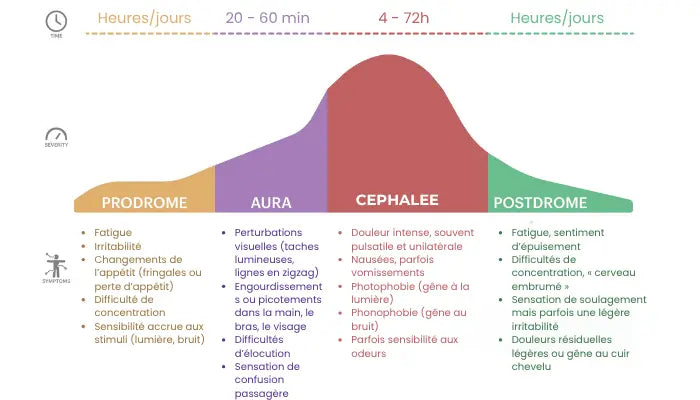
Les phases de la migraine
Ce schéma représente les 4 phases de la migraine : les prodromes, l'aura, la céphalée et les postdromes.
Conférence sur la migraine
Visionnez le replay de cette conférence animée par le Dr Shrivastava lors de la journée de la douleur.
Symptômes associés
Tableau comparatif des céphalées les plus courantes :
À retenir : la migraine est d’origine neurologique, liée à une dysfonction transitoire du cerveau, impliquant les neurones, les vaisseaux sanguins et la libération de neuropeptides comme le CGRP. Ce n’est ni une maladie vasculaire, ni simplement hormonale, ni psychologique.
Durée et type de douleur :
| Type de céphalée | Durée | Douleur |
|---|---|---|
| Migraine | 4 à 72 h | Pulsatile, souvent unilatérale |
| Céphalée de tension | 30 min à 7 jours | Sensation de serrement, bilatérale |
| Algie vasculaire de la face | 15 min à 3 h | Brûlure intense autour de l’œil |
Symptômes associés et intensité :
| Type de céphalée | Symptômes associés | Intensité |
|---|---|---|
| Migraine | Nausées, vomissements, photophobie, phonophobie | Modérée à sévère |
| Céphalée de tension | Fatigue, tension cervicale, pas de nausée | Légère à modérée |
| Algie vasculaire de la face | Larmoiement, nez bouché, agitation | Très sévère |

Une pathologie qui bouleverse la vie
La migraine est invisible, mais son retentissement est bien réel. Pour ceux qui en souffrent régulièrement, elle peut affecter toutes les dimensions de la vie quotidienne. Elle touche environ 15 % de la population mondiale, et constitue l’une des principales causes d’années vécues avec handicap selon l’OMS.
La migraine n’est donc pas une simple gêne ponctuelle, mais bien une maladie chronique, avec des mécanismes complexes et des manifestations multiples. Mieux la comprendre, c’est le premier pas vers un diagnostic plus rapide, un traitement adapté et une meilleure qualité de vie.
Conséquences courantes de la migraine sur la vie des patients
L'impact sociale de la migraine
Cette étude, menée avec l’association La Voix des Migraineux, donne la parole à 683 patients migraineux en France. Elle révèle :
- Un parcours de soins difficile : 7,5 ans en moyenne pour obtenir un diagnostic.
- Un handicap sévère : 96 % des participants ont un score HIT-6 élevé, et 70,7 % un score MIDAS indiquant une forte incapacité.
- Un impact professionnel et social majeur : 36 % décrivent leur parcours comme un "parcours du combattant", et plus de la moitié ne se sentent ni écoutés ni soutenus par les professionnels de santé.
- Un besoin criant d’amélioration du système de soins : retards de traitement, effets secondaires mal pris en charge, manque d’accès aux spécialistes.
Un plafond de verre
- Chez l’enfant : absences répétées à l’école, difficultés de concentration, anxiété
- Chez l’adulte actif : arrêts de travail fréquents, perte de productivité
- Chez les femmes : crises liées au cycle menstruel, influence hormonale marquée
- Sur le bien-être psychologique : repli sur soi, peur de la prochaine crise, incompréhension de l’entourage
- Dans la vie sociale : isolement, annulations de dernière minute, perte de spontanéité
Chaque personne migraineuse a un profil différent :
- Certaines font une crise par an, d’autres plusieurs par semaine
- La douleur peut durer 2 heures ou 3 jours
- Les symptômes associés varient : visuels, digestifs, neurologiques, etc.
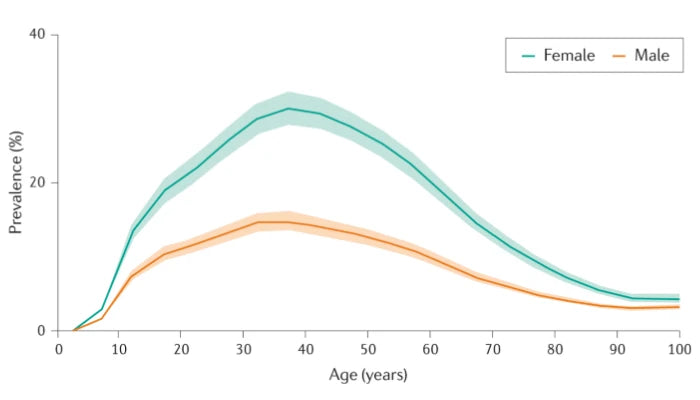
Le graphique suivant montre l'évolution de la prévalence de la migraine selon l'âge.
De plus en plus de patients migraineux
Cette analyse des données du Global Burden of Disease montre que :
- La prévalence mondiale de la migraine a augmenté de 58 % entre 1990 et 2021, atteignant 1,16 milliard de personnes.
- La migraine est la 2e cause mondiale de handicap (en années vécues avec une incapacité).
- Les adolescents et les hommes voient une croissance rapide de la prévalence.
- Les projections indiquent une hausse continue jusqu’en 2050, avec des implications majeures pour les politiques de santé publique.
Rejoignez la communauté ChèreMigraine
Entrez votre e-mail pour rejoindre ChèreMigraine et recevoir votre premier cadeau
Une communauté de patients migraineux
Vous souffrez de migraines ? Vous n’êtes pas seul.e.
Des milliers de patients comme vous ont déjà rejoint ChèreMigraine, la communauté dédiée à celles et ceux qui veulent mieux comprendre, mieux gérer… et mieux vivre avec leurs migraines.
En vous inscrivant avec votre e-mail, vous recevrez :
- astuces concrètes pour soulager les crises,
- conseils de spécialistes,
- cadeaux exclusifs, comme notre Cahier des Migraines
- l'actualités scientifiques sur la migraine, directement dans votre boîte mail.
Vous pouvez aussi nous retrouver sur Instagram ( @Chèremigraine ) pour échanger avec la communauté, partager vos expériences et rester informé.e au quotidien.
Identifier les différents types de migraines
La migraine n’a pas une seule et unique présentation. Derrière ce mot se cache une grande diversité de formes cliniques, avec des durées, des symptômes et des intensités très variables. Il est essentiel de comprendre que toutes les migraines ne se ressemblent pas : bien identifier le type de migraine dont on souffre est une étape clé vers un diagnostic précis et un traitement adapté.
Pour aller plus loin et découvrir davantage les différentes formes de migraine (avec ou sans aura, migraine ophtalmique, hémiplégique, etc.), explorez notre article : Les types de migraines.

Migraine sans aura
C’est la forme de migraine la plus fréquente : elle représente environ 75 % des cas.
Elle se manifeste par :
- Une douleur pulsatile, souvent localisée d’un seul côté de la tête (mais parfois bilatérale)
- Une intensité modérée à sévère
- Une durée de 4 à 72 heures
- Des symptômes associés :
nausées, vomissements,
photophobie, phonophobie...
Elle survient sans signe annonciateur évident (comme une aura), bien que certains patients puissent ressentir une phase de prodrome avant la douleur.

Migraine avec aura
La migraine avec aura concerne environ 20 à 25 % des personnes migraineuses. Elle se caractérise par l’apparition de symptômes neurologiques transitoires qui précèdent (ou accompagnent) la douleur.
Les auras peuvent être :
- Visuelles (les plus fréquentes) : points scintillants, lignes en zigzag, taches sombres ou floues
- Sensorielles : picotements, engourdissement d’un bras ou du visage
- Motrices (plus rares) : sensation de faiblesse musculaire ou troubles de la parole
Ces symptômes apparaissent progressivement en 5 à 60 minutes, durent généralement moins d’une heure, et disparaissent totalement. La céphalée peut survenir immédiatement après, ou être différée de quelques heures.

Formes rares ou atypiques
Certaines migraines présentent des manifestations inhabituelles ou concernent des populations spécifiques.
- Migraine ophtalmique : se manifeste par des troubles visuels importants
- Migraine hémiplégique : très rare, elle provoque une faiblesse temporaire d’un côté du corps, imitant un AVC.
- Migraine vestibulaire : caractérisée par des vertiges récurrents (avec ou sans douleur), troubles de l’équilibre et nausées intenses.
- Migraine abdominale : typique de l’enfant, elle provoque des douleurs abdominales intenses par crises, sans douleur à la tête.
- Migraine cataméniale : liée au cycle menstruel, elle survient dans les jours précédant les règles, souvent plus longue et résistante aux traitements habituels.

La migraine chronique
La migraine chronique est une forme sévère de migraine, définie par :
- ≥ 15 jours de céphalées par mois , dont au moins 8 jours avec critères de migraine
- Une durée supérieure à 3 mois
- Un impact majeur sur la qualité de vie, la productivité et le moral
- Une association fréquente à des comorbidités : anxiété, dépression, troubles du sommeil
- Un risque accru d’abus médicamenteux et de passage en migraine réfractaire
Elle nécessite une prise en charge médicale spécialisée, avec des traitements de fond adaptés et un suivi régulier pour espérer réduire la fréquence des crises.

Données épidémiologiques
La migraine est l’une des affections neurologiques les plus répandues, bien plus qu’on ne le pense. Selon l’Organisation mondiale de la santé (OMS), elle touche environ 1 personne sur 7 dans le monde, soit près de 1 milliard d’individus. Ce chiffre impressionnant place la migraine au même rang que d'autres grandes maladies chroniques comme le diabète ou l'asthme mais avec une reconnaissance publique et médicale encore largement insuffisante.
Elle ne se limite pas à un continent ou à une culture. La migraine concerne tous les groupes ethniques, tous les niveaux socio-économiques, et elle est présente dans toutes les zones géographiques. Bien que les conditions de diagnostic et de prise en charge varient selon les pays, le fardeau de la maladie reste global.
Poids socio-économique
La migraine est non seulement fréquente, mais elle est aussi l’une des principales causes de perte de qualité de vie dans le monde. Selon l’étude Global Burden of Disease publiée dans The Lancet, la migraine représente la 2e cause mondiale d’années vécues avec un handicap (YLD) chez les moins de 50 ans, toutes maladies confondues.
Ce retentissement fonctionnel massif s’explique par :
- La fréquence des crises, souvent imprévisibles, qui empêchent toute planification d'activité
- La sévérité des symptômes : douleurs, troubles sensoriels, nausées invalidantes
- L’impact sur la productivité : baisse de concentration, absentéisme répété, fatigue persistante
Ce fardeau invisible génère des coûts importants :
- Arrêts de travail fréquents dans les périodes de crise
- Dépenses de santé répétées : consultations, examens, traitements parfois inefficaces
- Errance diagnostique : patients mal orientés, explorations inutiles, retards de prise en charge
- Hospitalisations ponctuelles, notamment en cas de migraine chronique ou résistante
Et pourtant, dans de nombreux pays, la migraine reste sous-diagnostiquée, sous-traitée et sous-financée. Elle est encore trop souvent perçue comme une gêne mineure, alors qu’elle constitue une véritable maladie chronique handicapante.
Les personnes atteintes de migraine chronique (plus de 15 jours de migraine par mois) sont particulièrement exposées à une dégradation de leur qualité de vie, mais aussi à des comorbidités (anxiété, dépression, troubles du sommeil). La migraine ne s’exprime pas de la même façon chez chacun. Certains patients ne font qu’une crise par an, d’autres peuvent en avoir plusieurs par semaine. Cette variabilité complique sa reconnaissance et sa prise en charge.
Face à cette diversité de situations, il est essentiel d’adopter une approche personnalisée. Pour découvrir des solutions concrètes et des conseils pratiques au quotidien, consultez notre article dédié : Comment soulager la migraine ?

Le rôle du système nerveux central
La migraine ne naît pas dans les artères… mais bien dans le cerveau. Le cerveau migraineux devient hypersensible à des stimuli bénins (lumière, bruit, odeur), en raison d’une activation anormale de circuits neuronaux : c’est la sensibilisation centrale.
Zones impliquées dans le déclenchement et le maintien de la migraine :
Le cortex cérébral
Le cortex cérébral, en particulier dans les migraines avec aura, présente une hyperactivité soudaine suivie d’une onde de dépression électrique appelée dépression corticale envahissante. Ce phénomène entraîne des troubles visuels, sensoriels ou moteurs en fonction des zones touchées, avant même que la douleur n’apparaisse.
Le tronc cérébral
Le tronc cérébral, en particulier les noyaux du nerf trijumeau, agit comme un centre de transmission de la douleur. C’est lui qui relaie les signaux nociceptifs vers le cerveau et active une réponse inflammatoire dans les méninges, les fines membranes qui entourent le cerveau.
L’hypothalamus
L’hypothalamus est souvent activé dans les heures précédant la crise. Cette structure régule de nombreuses fonctions biologiques :
sommeil, appétit, hormones,
stress… autant de facteurs déclenchants identifiés dans la migraine. Certains patients ressentent d’ailleurs des signes avant-coureurs (envies alimentaires, irritabilité, bâillements) plusieurs heures avant la douleur : c’est la phase de prodrome, directement liée à l’hypothalamus.
Le nerf trijumeau
Le nerf trijumeau, qui innerve le visage et une grande partie du crâne, joue un rôle central dans la génération de la douleur migraineuse. Lorsqu’il est activé, il libère des substances inflammatoires dans les méninges, contribuant à l’amplification de la douleur.

Inflammation neurovasculaire et neurotransmetteurs
Le rôle des vaisseaux sanguins ne disparaît pas pour autant. Lors d’une crise, on observe une dilatation des vaisseaux méningés, c’est-à-dire les vaisseaux situés dans les membranes entourant le cerveau. Cette dilatation n’est pas la cause unique de la douleur, mais elle contribue à une
inflammation neurogénique locale.
Cette inflammation est alimentée par la libération de plusieurs
neurotransmetteurs et neuropeptides :
Le CGRP
Le CGRP (Calcitonin Gene-Related Peptide) est aujourd’hui au cœur de la recherche migraineuse. Il est libéré par les neurones du nerf trijumeau et provoque à la fois vasodilatation, inflammation
et transmission de la douleur. Les nouveaux traitements anti-CGRP ciblent directement ce mécanisme.
La sérotonine
La sérotonine (5-HT) joue un rôle ambivalent. En baisse avant la crise, elle pourrait être un déclencheur indirect. Les triptans, traitements classiques de la crise, agissent en partie sur les récepteurs à sérotonine.
La dopamine
La dopamine, impliquée dans la régulation de l’humeur, de la motivation et du système digestif, peut expliquer certains
symptômes associés à la migraine (nausées, troubles gastro-intestinaux, fatigue intense).
La substance P
La substance P et le glutamate
participent à l’entretien de l’inflammation et à l’excitation prolongée des neurones de la douleur.

Terrain génétique et hypersensibilité neuronale
Pourquoi certaines personnes sont-elles plus sujettes à la migraine que d’autres ? La réponse se trouve en partie dans les gènes. Certaines mutations ont été identifiées dans les formes familiales rares, comme la migraine hémiplégique. Ces mutations affectent le transport des ions (calcium, sodium) à travers les membranes neuronales, modifiant la réactivité des neurones.
Mais même dans les formes non héréditaires, la prédisposition familiale est très fréquente : plus de 70 % des patients migraineux ont un parent également touché.
Cette susceptibilité génétique s’exprime souvent par une hypersensibilité neuronale :
- Les stimuli sensoriels (lumière vive, bruits, odeurs) sont perçus comme agressifs
- Le cerveau réagit de façon exagérée au manque de sommeil, au stress, ou à certains aliments
- L’excitation neuronale n’est pas correctement modulée, ce qui facilite le déclenchement des crises
Ce terrain particulier explique la variabilité d’une personne à l’autre, mais aussi d’une crise à l’autre. Il souligne l’importance d’une approche personnalisée dans le diagnostic et la prise en charge.
Causes, facteurs et risques déclencheurs
La migraine ne survient pas au hasard. Si ses mécanismes neurologiques sont aujourd’hui mieux compris , ses causes profondes restent encore partiellement élucidées. On sait toutefois qu’elle résulte de facteurs multiples: génétiques, hormonaux, environnementaux et sensoriels. Ces éléments influencent à la fois la prédisposition à souffrir de migraine et la fréquence des crises.
Pour aller plus loin, découvrez notre article dédié aux causes et symptômes de la migraine, afin de mieux reconnaître les signaux du corps et comprendre les mécanismes en jeu.



Les 4 phases de la crise migraineuse
Une crise migraineuse ne commence pas et ne se termine pas avec la douleur. Elle se décompose souvent en plusieurs phases successives, qui peuvent s’étaler sur plusieurs heures, voire plusieurs jours.
Les 4 grandes phases :
Le prodrome (quelques heures à deux jours avant la crise) :
- Signes précoces : bâillements, irritabilité, fringales, difficulté à se concentrer
- Cette phase est souvent sous-estimée, mais peut aider à anticiper la crise
L’aura (chez 20 à 25 % des patients) :
- Troubles visuels (scintillements, flous, lignes en zigzag), troubles sensoriels ou moteurs
- Dure de 5 à 60 minutes, précède généralement la douleur
La phase douloureuse :
- Douleur intense, unilatérale, pulsatile
- Symptômes associés (nausées, photophobie, phonophobie...)
- Peut durer de 4 à 72 heures si non traitée
Le postdrome (phase de récupération) :
- Sensation de fatigue extrême, confusion, corps « vidé »
- Peut durer 24 à 48 heures après la disparition de la douleur
Comprendre ces phases permet de mieux anticiper les crises et d’adapter le traitement dès les premiers signes.

Quand consulter un spécialiste ?
La migraine peut souvent être diagnostiquée par un médecin généraliste, mais certaines situations nécessitent l’avis d’un neurologue ou d’un centre spécialisé dans les céphalées.
Voici quelques situations où une consultation spécialisée est recommandée :
- Douleur inhabituelle ou brutale, surtout si elle apparaît soudainement (« coup de tonnerre »)
- Aggravation rapide de la fréquence ou de l’intensité des crises
- Anomalies neurologiques inhabituelles : perte de vision, trouble de la parole, paralysie
- Échec des traitements de crise classiques ou suspicion de migraine chronique
Il est important de ne pas banaliser une migraine qui change de forme, s’intensifie, ou s’accompagne de signes atypiques. Dans certains cas, ces symptômes peuvent révéler une pathologie plus grave (AVC, tumeur, méningite), d’où l’importance de ne pas retarder le diagnostic.
À noter : une migraine stable depuis plusieurs années, avec symptômes classiques, ne nécessite pas systématiquement d’imagerie cérébrale.

L’importance du suivi
Une fois le diagnostic posé, il est essentiel de mettre en place un suivi régulier, même si les crises sont peu fréquentes. La migraine est une maladie évolutive : sa fréquence, son intensité et ses déclencheurs peuvent changer avec le temps.
Voici les éléments clés d’un bon suivi :
- Tenue d’un journal de crise : fréquence, durée, symptômes, déclencheurs, réponse au traitement
- Consultations régulières : pour ajuster le traitement, évaluer le retentissement, repérer un passage à la migraine chronique
- Évaluation du retentissement sur la qualité de vie : échelle MIDAS, HIT-6, ou questionnaires spécialisés
- Adaptation du traitement de fond en fonction de l’évolution : un traitement efficace au début peut ne plus l’être après quelques mois
Un bon suivi permet aussi d’anticiper les complications, comme la surconsommation médicamenteuse (cause fréquente de céphalée chronique) ou les comorbidités psychologiques (anxiété, dépression).

Traitements de crise et de fond
Il n’existe pas de solution universelle pour soulager la migraine : les traitements doivent être personnalisés.
Traitements de la crise
Les traitements de crise ont pour objectif de stopper la douleur le plus rapidement possible, et de limiter les symptômes associés (nausées, vomissements, photophobie…).
Médicaments utilisés :
- AINS (anti-inflammatoires non stéroïdiens)
- Triptans : médicaments spécifiques de la migraine
- Antiémétiques
Alternatives complémentaires :
- Huiles essentielles : la menthe poivrée ou la lavande vraie
- Repos dans le noir et le silence
- Techniques de relaxation
Traitements de fond
Lorsque les crises deviennent trop fréquentes (plus de 4 jours par mois) ou très invalidantes, un traitement de fond peut être proposé. Son objectif : diminuer la fréquence, l’intensité et la durée des crises, voire les faire disparaître.
Médicaments préventifs classiques :
- Bêtabloquants (propranolol, métoprolol)
- Antiépileptiques (topiramate, valproate)
- Antidépresseurs tricycliques (amitriptyline)
- Anticorps anti-CGRP (erenumab, galcanezumab, fremanezumab)
| Profil migraineux | Caractéristiques | Traitement recommandé |
|---|---|---|
| Migraine épisodique sans aura | Crises peu fréquentes, douleur unilatérale pulsatile, nausées | AINS, triptans au besoin, hygiène de vie |
| Migraine avec aura | Troubles visuels ou sensoriels avant la douleur | Triptans dès l’aura, traitement de fond si récurrence |
| Migraine cataméniale | Crises liées aux menstruations, souvent résistantes | Triptans, anti-inflammatoires, traitement hormonal ciblé |
| Migraine chronique | ≥ 15 jours de maux de tête/mois dont ≥ 8 jours de migraine | Traitement de fond (anti-CGRP, bêtabloquants, TENS) |
| Migraine résistante ou médicamenteuse | Échec des traitements classiques, abus médicamenteux | Sevrage, centre anti-douleur, alternatives non médicamenteuses |
Mieux vivre avec la migraine au quotidien
La migraine ne se soigne pas seulement par des médicaments. Elle se gère aussi au quotidien par l’observation, la prévention et l’adaptation. Comprendre sa maladie, identifier ses déclencheurs et ajuster son environnement permettent souvent de réduire la fréquence des crises et de retrouver une meilleure qualité de vie. Il ne s’agit pas simplement d’éviter ce qui fait mal, mais d’apprendre à composer avec une sensibilité neurologique particulière.
Éviter les déclencheurs
Identifier les éléments qui précèdent ou favorisent les crises est un point clé dans la gestion de la migraine. Ce n’est pas une démarche standard : chaque patient est unique.
Trois piliers à surveiller :
- Routine de sommeil : se coucher et se lever à heure fixe, éviter les variations brutales (week-ends, décalages horaires), limiter les écrans en soirée.
- Gestion du stress : relaxation, sophrologie, activité physique douce, cohérence cardiaque. Le stress est un des facteurs les plus fréquemment retrouvés avant une crise.
- Hygiène de vie globale : alimentation régulière, bonne hydratation, suppression des excès (café, sucre, alcool), pauses fréquentes en cas de travail sur écran.
Tenir un journal de crise permet de croiser les déclencheurs potentiels (nourriture, émotions, météo...) et d’identifier les profils de risque.
Adapter son environnement
L’environnement sensoriel joue un rôle majeur dans le déclenchement ou l’aggravation d’une migraine. Adapter son cadre de vie peut grandement limiter les agressions visuelles, sonores ou olfactives.
Quelques ajustements simples :
- Lumière : privilégier la lumière naturelle tamisée, utiliser des filtres pour écrans, éviter les éclairages LED trop blancs ou clignotants.
- Bruit : écouteurs avec réduction de bruit passive, zones calmes au travail ou à l’école, pauses sensorielles régulières.
- Odeurs : éviter les parfums forts, aérer régulièrement les pièces, choisir des produits d’entretien neutres.
- Poste de travail : écran à bonne hauteur, siège ergonomique, pauses oculaires toutes les 20 minutes.
Ces mesures réduisent la charge sensorielle subie par le cerveau, en particulier lors des phases prodromiques où il devient plus vulnérable.
En parler autour de soi
La migraine est souvent invisible. Pourtant, elle a des répercussions sociales, scolaires et professionnelles majeures. En parler est essentiel pour obtenir du soutien et adapter son quotidien sans culpabilité.
Pourquoi communiquer sur sa migraine ?
- En milieu professionnel : aménagements possibles (horaires flexibles, télétravail, pauses supplémentaires, poste adapté)
- En milieu scolaire : meilleure tolérance des absences, adaptation des examens ou des rythmes d’apprentissage
- Dans le cercle familial : compréhension des crises, réduction du stress relationnel, meilleure gestion des responsabilités
L’acceptation de la migraine comme une vraie pathologie neurologique est une étape importante pour le patient. Ce n’est pas une faiblesse, ni un simple mal de tête, mais une condition chronique avec un retentissement réel sur la qualité de vie .
Des associations comme La Voix des Migraineux proposent des ressources pour expliquer la migraine à ses proches, à ses collègues ou à ses enseignants.
Pour aller plus loin, explorez notre article : Comment soulager la migraine ?

Ce que la migraine révèle de notre cerveau
Et si la migraine n'était pas uniquement une pathologie à éliminer, mais également une manifestation des stratégies de régulation ? Certains neurologues proposent une lecture évolutive de la migraine. Le cerveau migraineux serait en réalité un cerveau hyper-réactif, conçu pour détecter très tôt les menaces : surcharge sensorielle, fatigue extrême, danger environnemental. La crise migraineuse serait alors une réponse de protection.
En cas de surcharge le cerveau migraineux déclencherait une crise pour interrompre brutalement l’activité neuronale excessive. Ce processus, impliquant notamment la dépression corticale envahissante ou la libération de neuropeptides comme le CGRP, serait une forme extrême de protection des circuits supérieurs.
Un modèle pour mieux comprendre la douleur chronique :
- Mieux comprendre les mécanismes de chronicisation de la douleur
- Identifier les structures cérébrales impliquées dans la modulation de la douleur
- Explorer de nouvelles cibles thérapeutiques comme les traitements anti-CGRP, la stimulation magnétique transcrânienne, ou la modulation des réseaux neuronaux impliqués dans la douleur


Your cart
0
Your cart is currently empty.
Vous ne savez pas par où commencer ? Essayez ces collections :

- Choosing a selection results in a full page refresh.
- Opens in a new window.